Total Pageviews
Sunday, February 27, 2011
Jobs
When thinking about problems, you gotta think short, medium, and long term. The deficit is a big problem in the medium and long term, but not the short term. America is by a huge margin the largest and most stable economy in the world. If our deficit continues to rapidly expand, it's possible that we will lose that status in 7-10 years (medium term), but that is some way off.
But there are about 11 million people who are unemployed right now. That's an immediate problem, both morally and fiscally. If half of those could find work, they would also consume a lot more goods, thereby helping the economy, pay a lot more taxes, thereby raising revenue, and cost less spending on things like unemployment insurance, reducing spending. That should be the #1 immediate focus of the government.
Obama's tried to get as much fiscal stimulus done as he could, which helped a lot, but there is a lot more to be done. Almost all of the Republicans proposals address the medium to long-term problem - the deficit - but I haven't seen anything they've proposed that will actually help job growth. Actually, by cutting spending and social services, they will almost certainly cost us more jobs! Backwards and dumb. It's like your doctor removing a precancerous tumor instead of operating on your gunshot wound.
Thursday, February 24, 2011
The Chart to End All Charts!
There's so much good stuff here that I barely know where to begin. (This is from the Congressional Budget Office, the best place to find budgetary information) Take a second and look at it carefully...
The black line is how much revenue (tax money) the government takes in. The bars represent the amount of spending the government does each year, and it breaks it down by type of spending. If the black line is higher than the bars, that means we raised more money than we spent -- budget surplus (like in 2000, under Clinton). If the black line is lower than the bar, budget deficit -- we're in the red, that is our deficit.
Ugh, I don't even know where to begin. First, you can see under Bush that revenue went down (bc he cut taxes), but spending went up. This is pretty irresponsible. BUT! He started doing much better in his second term -- the black revenue line almost catches the spending. Who knew? I didn't. Not sure what's going on there, but it should be noted (I think this is right) that this chart doesn't take into account war-spending, so the actual spending under Bush was significantly higher.
The second point is more important -- what happened to revenue between 2008 and 2009? It PLUMMETED. Why? Recession! Recessions make people poorer, and poorer people pay less taxes, so the government collects less money. At the same time, government spent a lot more on entitlements than in previous years, because we were paying more unemployment insurance, medicaid, and the stimulus. That is economics 101 - not having the government step in and pay for those things would just lead to more poverty and misery. But, as we start to grow again, revenue shoots back up, as it's doing now.
Third, and this is in direct response to Max (finally found the chart I was looking for!), you can see pretty clearly that defense spending and non-defense discretionary spending (basically, everything but entitlements like social security and medicaid and all the other stuff) are pretty flat. You can cut military spending in half and you'd still have a budget deficit. Same for cutting the non-defense discretionary spending -- that's what Republicans in the House are cutting now. Chump change! The cause of the increase in the deficit mirrors entitlements and interest on the debt. As those green and purple lines jump up, so does the deficit. That's where we need to be focusing on for real cuts -- the other stuff is all smoke and mirrors.
The black line is how much revenue (tax money) the government takes in. The bars represent the amount of spending the government does each year, and it breaks it down by type of spending. If the black line is higher than the bars, that means we raised more money than we spent -- budget surplus (like in 2000, under Clinton). If the black line is lower than the bar, budget deficit -- we're in the red, that is our deficit.
Ugh, I don't even know where to begin. First, you can see under Bush that revenue went down (bc he cut taxes), but spending went up. This is pretty irresponsible. BUT! He started doing much better in his second term -- the black revenue line almost catches the spending. Who knew? I didn't. Not sure what's going on there, but it should be noted (I think this is right) that this chart doesn't take into account war-spending, so the actual spending under Bush was significantly higher.
The second point is more important -- what happened to revenue between 2008 and 2009? It PLUMMETED. Why? Recession! Recessions make people poorer, and poorer people pay less taxes, so the government collects less money. At the same time, government spent a lot more on entitlements than in previous years, because we were paying more unemployment insurance, medicaid, and the stimulus. That is economics 101 - not having the government step in and pay for those things would just lead to more poverty and misery. But, as we start to grow again, revenue shoots back up, as it's doing now.
Third, and this is in direct response to Max (finally found the chart I was looking for!), you can see pretty clearly that defense spending and non-defense discretionary spending (basically, everything but entitlements like social security and medicaid and all the other stuff) are pretty flat. You can cut military spending in half and you'd still have a budget deficit. Same for cutting the non-defense discretionary spending -- that's what Republicans in the House are cutting now. Chump change! The cause of the increase in the deficit mirrors entitlements and interest on the debt. As those green and purple lines jump up, so does the deficit. That's where we need to be focusing on for real cuts -- the other stuff is all smoke and mirrors.
Brothers Koch
Don't really get the left's concern about them, to be honest. There are big fundraisers on the left and on the right (Koch Bros., meet Soros). I think partisans on both sides feel that generally, this is a bad thing, except when it's not. Democrats like that Soros money (although he hasn't been donating to candidates lately), and Republicans like that Koch money. This isn't a partisan problem - money is corrupting both sides of the equation.
The left is happy for some reason that the Governor Walker of Wisconsin accepted what turned out to be a prank phone call from one of these Koch brothers, while apparently refusing to talk to the union he was attempting to bust. This proves...I don't know what. That Walker takes phone calls from (a) people who give him lots of money and (b) who he has spoken with before. OK! It's not much of a surprise that he wasn't taking direct calls from the union, considering that he is trying to break them up. Compromise is not Walker's goal. Is that why liberals are gloating? Newsflash: lots of people don't like unions, public sector ones especially. I think those people are wrong, and should be responded to on the merits. But the whole Koch thing is a distraction.
Conservatives do this too with Soros. I don't get it.
Huckabee
I don't think Huckabee is going to run for president, but if he does, I think he'd be one of the more formidable opponents for Obama. He has some crazy beliefs (creationism, flat tax, anti-gay marriage, etc.) but he doesn't seem like a crazy person. This is significant! Almost all the Republicans actually seem somewhat unhinged and/or out of the mainstream. We all know how Sarah Palin is, but there are others. Here's Tim Pawlenty, who won't win but is really trying, introducing himself to the American public.
I mean, that's weird. Real life isn't a movie. It's just strange. This type of stunt may appeal to the far right of people who vote in Republican primaries, but not to regular Americans.
How about Haley Barbour? He's so out there that he won't even commit to denouncing one of the founders of the KKK. That's crazy! He also talked about going to go see a MLK rally in the 60s in order to pick up girls. What! I know some liberals think that Americans are stupid and racist, but most people won't vote for a guy with that kind of background. It's too far out there.
Anyway -- Huckabee seems rational all the time. He's folksy and well-spoken and humble and funny. And guess what he did today. Defended Obama regarding his ties to Jeremiah Wright! More than anything else, this makes me think he'll run. He knows he's well-positioned to win the primaries, and is already trying to highlight that he's not a crazy nut. Good strategy!
Tiger Dog
You know why China is gonna beat America? INGENUITY. For example, they have created tiger-dog and panda-dog.
Wednesday, February 23, 2011
Daylight Savings Wackiness
Did you know that Arizona does not observe Daylight Savings, but the Navajo Nation within Arizona DOES?! That's wild.
Beck: Reform Judaism = Radical Islam
On his radio program, Beck says Reform Judaism is "almost like radicalized Islam."
Beck's a clown, but clowns are kind of scary.
Long, wonky, nerdy, tangential post on why Republicans are wrong
Back to nerdy posts! Alright, this chart basically shows the fallacy of the Republican diagnosis of what ails the economy. Republicans in general decry 1) all government spending 2) the size of government. These are not the same things. The size of government is (basically) all the people the government employs. Government spending IS a real problem in that it is unsustainable. But the causes of its instability are entirely divorced from what Republicans say the problem is.
Deficits 101: all a deficit means is that the government is taking in less money than it's spending. It's like if you make $40,000 a year but spend $45,000. That's it. So if that happens, you'd probably want to check out where your costs are coming from and cut them where you can. Oh good more charts:
Charts are great. Anyway, a few things should stick out to you here. Two costs are flat -- "other spending" (things like the military, education, etc. etc.) and "social security" will cost basically the same now as the always will. The driver of the future deficit is almost completely health care costs. In other words, if you want to be serious about the deficit you should focus on health care reform.
Oh wait. Didn't Obama do something like that? I seem to remember something about ObamaCare cutting about $450billion in medicare costs over the next ten years? Wow! That is actually a lot money. By comparison, the House Republicans right now are debating about cutting between...$66million and $100million in cuts. If you extend that by ten years, that's still about 1/50th the amount of cuts Obama passed in health care reform. And that's exactly where we should be focusing.
Sorry, that was a huge tangent, but it's important. The cuts the Republicans want are utterly superfluous to our long-term fiscal condition, and hurtful in the short-term. They're cutting programs like Pell Grants so middle class kids can go to college, Head Start so poor kids can get pre-school education, heating subsidies for people who can't afford it in the winter, and great programs that are demonstrated to work, like Teach For America. They are NOT cutting Medicare/Medicaid, and they actually criticized Obama for making those cuts (they also just claim without any basis that the cuts won't happen. I don't understand that argument at all...they're in the law.)!
The takeaway is this: look at the chart at the top of the page. In the last year, the percentage of private sector people being hired has gone steadily up, while the number of people in the public sector (people employed by the government) has gone down. The Republicans are now proposing cutting MORE people from the public sector. How will this strengthen our economy in the short term, and how will it help cut the deficit in the long term? Public sector employment has next to nothing to do with the deficit.
OK.
Deficits 101: all a deficit means is that the government is taking in less money than it's spending. It's like if you make $40,000 a year but spend $45,000. That's it. So if that happens, you'd probably want to check out where your costs are coming from and cut them where you can. Oh good more charts:
Charts are great. Anyway, a few things should stick out to you here. Two costs are flat -- "other spending" (things like the military, education, etc. etc.) and "social security" will cost basically the same now as the always will. The driver of the future deficit is almost completely health care costs. In other words, if you want to be serious about the deficit you should focus on health care reform.
Oh wait. Didn't Obama do something like that? I seem to remember something about ObamaCare cutting about $450billion in medicare costs over the next ten years? Wow! That is actually a lot money. By comparison, the House Republicans right now are debating about cutting between...$66million and $100million in cuts. If you extend that by ten years, that's still about 1/50th the amount of cuts Obama passed in health care reform. And that's exactly where we should be focusing.
Sorry, that was a huge tangent, but it's important. The cuts the Republicans want are utterly superfluous to our long-term fiscal condition, and hurtful in the short-term. They're cutting programs like Pell Grants so middle class kids can go to college, Head Start so poor kids can get pre-school education, heating subsidies for people who can't afford it in the winter, and great programs that are demonstrated to work, like Teach For America. They are NOT cutting Medicare/Medicaid, and they actually criticized Obama for making those cuts (they also just claim without any basis that the cuts won't happen. I don't understand that argument at all...they're in the law.)!
The takeaway is this: look at the chart at the top of the page. In the last year, the percentage of private sector people being hired has gone steadily up, while the number of people in the public sector (people employed by the government) has gone down. The Republicans are now proposing cutting MORE people from the public sector. How will this strengthen our economy in the short term, and how will it help cut the deficit in the long term? Public sector employment has next to nothing to do with the deficit.
OK.
New Guest Blogger
In the coming days and weeks, we'll be rolling out some guest bloggers. You've already met Asian Correspondent Tricia Honggr. Next up will be the famed Number 2 Meal Orange Soda Contributor, blogging about a certain dog with a ghost paw.
The Greatest Movie of All Time
Asian correspondent Honggr reporting live here for the first time!
This cinematic masterpiece is called TipToes (with a solid 29% on Rotten Tomatoes) and I can't believe I didn't know about it until now (thanks Daniel Tosh!). Here is the basic plot:
Matthew McConaughey knocks up Kate Beckinsale. His family happens to be all dwarves and he kind of has a problem with that. Sometimes. But anyway, he didn't tell Kate about his family's genetic situation until it was too late and she spends a good amount of time debating whether or not to keep this baby that may potentially be a dwarf.
Real quote from the movie: "So you had a circle jerk with a bunch of little people? I would love to see that!"
Spoiler alert, baby is a dwarf. McConaughey ends up dumping Miss Kate after she gives birth to his dwarf baby because it would be easier for her to raise this baby alone rather than having McConaughey around. Because McConaughey has a problem with dwarves, remember?
Then she falls in love with McConaughey's twin, who also happens to be a dwarf, and also happens to be Gary Oldman (you know, Sirius Black... Commissioner Gordon!). Right, because sometimes, a twin is 10 years older and more British-y than the other twin. It totally happens all the time. Oh, and Patricia Arquette is involved somehow.
Anyway, the movie is not a comedy.
DOMA Arrigato Mr. Obam-o
That is a horrible post headline! Meh.
The Obama administration just announced it will stop defending the Defense of Marriage Act (DOMA) in court. Cool!
DOMA was one of those fairly odious pieces of law Bill Clinton supported during his reelection campaign in 1996. It defined marriage as a union between a male and female and denied the federal government from recognizing same-sex marriage. What?! Bill Clinton signed that you say? Yeah he did! People should stop thinking he was the man so much -- name one piece of legislation Obama has signed that is so obviously both morally wrong and a sell-out of his core constituency. (Note: this is an unfair question. Obama hasn't had to do this yet because he had unified Democratic control of both houses of Congress. But still!) Clinton had a bunch. Don't Ask Don't Tell. DOMA. Uhh...NAFTA to some people I guess but I like that one. The point is he compromised his values a lot for the sake of winning elections, and I don't think there's much of an argument you can make that Obama has or will do that.
Anyway, this is really good. It's one more step toward gay marriage, which is really one of the most no-brainer civil rights issues of our time. I generally credit whoever disagrees with me with having at least a legitimate argument. Pro-life? I disagree, but I can see why you would want to err on the side of protecting a life if you can't really determine when "life" begins. Tea Party? Bunch of nuts, generally, but concerns about spending and the deficit need to be taken seriously for our long-term stability. Etc. etc. But I really have never heard any kind of cogent, fact-based (not theological) argument against gay marriage. I've heard a lot! They're all ridiculous.
UPDATE: 8 gay rights victories since Obama took office.
Tuesday, February 22, 2011
What Americans Think of Inequality in One Graph
Blatant rip-off of Ezra Klein. I <3 that guy. I even ripped off his title! Can I be sued for that? Someone call a lawyer!
Gaddifisms
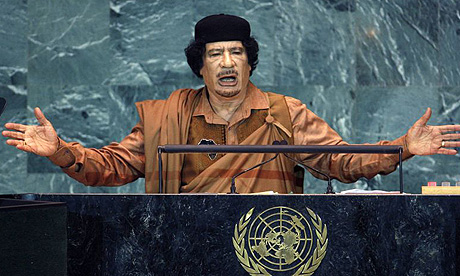
This Gaddafi guy is a legitimate supervillian. These are actual, real quotes from the speech he gave today. He sounds like Lex Luthor!
"Today, when you say Libya—yes, Libya, Qaddafi, Qaddafi, the revolution! All the African people now consider Libya the leader, even Asia—the world leaders, now—all of them, everyone, with their power, are against Libya…. They defame your image in, unfortunately, now, the Arab media, who are serving the devil. Now it’s the time to respond with action on the ground, in the square…. The revolution means always sacrifice until the end of the age.
"PS I wear white togas embroidered with rhinestones to the funerals. BECAUSE I AM EVIL."
"I will die as a martyr"
This guy sucks. Here's what he had to say today, annotated:
"I am a fighter, a revolutionary from tents [that's why i don't know how to dress]... I will die as a martyr at the end." [that would be cool! let's make it happen]
"I have not yet ordered the use of force, not yet ordered one bullet to be fired [this is a lie]... when I do, everything will burn [that is scary]."
"You men and women who love Gaddafi [no one knows Qaddafi's name is spelled with a G or a Q. obviously Q's are cooler, so from now on I'll use the G spelling] ...get out of your homes and fill the streets. Leave your homes and attack them in their lairs [lairs always sounds insidious but i think he means "public squares and parks"]... Starting tomorrow the cordons will be lifted, go out and fight them."
Shouting in the rambling speech, Gaddafi declared himself "a warrior" and proclaimed: "Libya wants glory, Libya wants to be at the pinnacle, at the pinnacle of the world" [blah blah i love africa and wearing window drapes]
Seriously, this is exactly the worry for these protesters in the rest of the Middle East: most regimes are REALLY OPPRESSIVE AND MURDEROUS. I think the best hope now is that the military turns on him and, yes, kills his brains out. There's not much the U.S. can do. Diplomatic pressure won't mean monkey crap to this loser-dictator.
Also, Libya is the world's 3rd largest oil-producing nation. This could REALLY cause a disruption in the world's oil-flow and lead to massive gas price shocks. Watch out summer, gas could easily hit $5/gallon for a sustained period. Honestly, I think something like that could really hurt Obama. People HATE high gas prices, and there is very little he can do about it. Damn!
"I am a fighter, a revolutionary from tents [that's why i don't know how to dress]... I will die as a martyr at the end." [that would be cool! let's make it happen]
"I have not yet ordered the use of force, not yet ordered one bullet to be fired [this is a lie]... when I do, everything will burn [that is scary]."
"You men and women who love Gaddafi [no one knows Qaddafi's name is spelled with a G or a Q. obviously Q's are cooler, so from now on I'll use the G spelling] ...get out of your homes and fill the streets. Leave your homes and attack them in their lairs [lairs always sounds insidious but i think he means "public squares and parks"]... Starting tomorrow the cordons will be lifted, go out and fight them."
Shouting in the rambling speech, Gaddafi declared himself "a warrior" and proclaimed: "Libya wants glory, Libya wants to be at the pinnacle, at the pinnacle of the world" [blah blah i love africa and wearing window drapes]
Seriously, this is exactly the worry for these protesters in the rest of the Middle East: most regimes are REALLY OPPRESSIVE AND MURDEROUS. I think the best hope now is that the military turns on him and, yes, kills his brains out. There's not much the U.S. can do. Diplomatic pressure won't mean monkey crap to this loser-dictator.
Also, Libya is the world's 3rd largest oil-producing nation. This could REALLY cause a disruption in the world's oil-flow and lead to massive gas price shocks. Watch out summer, gas could easily hit $5/gallon for a sustained period. Honestly, I think something like that could really hurt Obama. People HATE high gas prices, and there is very little he can do about it. Damn!
Monday, February 21, 2011
Fashion Icon
"Michelle has the same dress!"
Call me Davy Crocketerrorist!
I am wearing designer 3-d glasses
I love Africa so much that I wear it. It is not tacky, I promise.
I picked out this dress in Blinds-To-Go! 20% off!
Eagle Scout
Libya
Looks like Libya is teetering on the brink of revolution itself now. Cool! Qaddafi is way worse of a dictator than Mubarak or whoever was in charge in Tunisia (both in terms of human rights abuses to his own people and his impact on American interests abroad). Plus he's really weird looking and has a bad fashion sense.
BUT. I was reading a conversation with Gail Collins (liberal NYT columnish) and David Brooks (moderate conservative NYT columnish) where Collins stupidly said something like "who knows, maybe if we hadn't invaded Iraq, the Iraqis themselves would be throwing out Saddam now, just like the Egyptians did." I think we can all agree that that would be nice. However, as Brooks astuteley countered "Saddam would shoot!" Meaning that, unlike Mubarak who lost control of the military, Saddam would've just slaughtered all the protesters. How do we know? He did! He gassed the Kurds in the mid-90s. "He gassed his own people" - George W. Bush. I quote a lot of people who were terrible at their jobs in this blog, apparently. Anyway, the question now to me is -- will Qaddafi shoot his own people in order to retain power? I don't know. I mean, he's already killed some of them, but the real question is will he just unleash the army on the protesters with absolute license to kill. I don't think he will, but he might. He's pretty crazyevil.
UPDATE: This is exactly what I was talking about. Some Libyan colonels are fleeing the country so they don't have to bomb the civilians, but others are bombing indiscriminately...
BUT. I was reading a conversation with Gail Collins (liberal NYT columnish) and David Brooks (moderate conservative NYT columnish) where Collins stupidly said something like "who knows, maybe if we hadn't invaded Iraq, the Iraqis themselves would be throwing out Saddam now, just like the Egyptians did." I think we can all agree that that would be nice. However, as Brooks astuteley countered "Saddam would shoot!" Meaning that, unlike Mubarak who lost control of the military, Saddam would've just slaughtered all the protesters. How do we know? He did! He gassed the Kurds in the mid-90s. "He gassed his own people" - George W. Bush. I quote a lot of people who were terrible at their jobs in this blog, apparently. Anyway, the question now to me is -- will Qaddafi shoot his own people in order to retain power? I don't know. I mean, he's already killed some of them, but the real question is will he just unleash the army on the protesters with absolute license to kill. I don't think he will, but he might. He's pretty crazyevil.
UPDATE: This is exactly what I was talking about. Some Libyan colonels are fleeing the country so they don't have to bomb the civilians, but others are bombing indiscriminately...
Friday, February 18, 2011
Let them eat cheese or something
So this business up in the cheese state with the public sector unions maybe losing the right to collectively bargain and the Democrats leaving the state. Really weird! But not weird in the sense that it's unheard of - weird in that this is actually a pretty old form of political protest, dating back to the founding of the country! As my sister can probably tell you more about (happy birthday Emily!), when the Founding Fathers were debating whether to ratify the Constitution back in 1787, the Pennsylvania Antifederalists refused to show up for the vote so that the pro-Constitution folk wouldn't get a quorum. (I think that's right, correct me if I'm wrong, 3 readers). Anyway, it's basically identical to what the Democrats are doing in Wisconsin today, and what they did in Texas in 2002 when they protested Tom Delay's redistricting plan, and what I'm sure Republicans have done in the past too -- denying quorum to slow things down.
More big picture -- is this a good thing for democracy? Sort of. It seems filibustery to me, in the sense that it just slows down the process. That's ok to a degree. The problem in Congress, which I'll probably talk about more later, is that the filibuster is no longer a tool to slow things down and force more negotiation/compromise/consensus - it's a pure tool of obstruction. That is bad and anti-democratic. This stunt is more in line with the traditional filibuster, which blocked the majority from ramming legislation through. I'm more ok with that. Clearly, SOMETHING will happen with the public sector unions - maybe Democrats will get a slightly better deal than they would've before.
Closing thought: What the governor of Wisconsin is trying to do isn't unprecedented. Lots of states have weak collective bargaining rights for their unions.
Chart!
Thursday, February 17, 2011
Protests in the Middle East Part Two: In which I waffle between being a realist and neocon
The second point is what the Obama administration should do in the face of these protests. Obviously, it’s the same balancing act that American administrations have faced for the past 60 years – whether to side with strong-man dictators who offer support for our policies, or to side with the democratic protesters who are almost invariably more hostile toward U.S. interests (with the possible exception of in Iran).
Most commentators try to break these down into two camps: the realists, who support whichever side favors our interests more, and the ideologues who think the spread of democracy is a net good. In fact, policymakers almost always must balance the competing interests, and do so pragmatically. I think the post-Cold War presidents are generally supportive of pro-democracy movements so long as the downside for U.S. interests is not too steep. We lose a corrupt but supportive dictator in Egypt, and (generally) side with the protesters. This will doubtless make U.S. policy in the region at least temporarily more difficult, but our impulse to side with the pro-democratic movement trumps the realist argument.
But in places like Afghanistan or Yemen where we are actively fighting Al Qaida, we continue to prop up strong-men, even in the face of corruption, violence, and dictatorships. Indeed, while the State Department has offered words of support for the protesters in almost every other Middle Eastern country, they have been conspicuously silent for those in Yemen, where the likelihood of revolution seems high – most likely because of Yemen’s leader’s support of American bombings of suspected terrorist targets in the country. In Yemen, Obama’s realist calculations trump his democracy-supporting impulses, for better or worse. I mean that! I don’t know if it’s for better or worse. It is unknowable.
Most commentators try to break these down into two camps: the realists, who support whichever side favors our interests more, and the ideologues who think the spread of democracy is a net good. In fact, policymakers almost always must balance the competing interests, and do so pragmatically. I think the post-Cold War presidents are generally supportive of pro-democracy movements so long as the downside for U.S. interests is not too steep. We lose a corrupt but supportive dictator in Egypt, and (generally) side with the protesters. This will doubtless make U.S. policy in the region at least temporarily more difficult, but our impulse to side with the pro-democratic movement trumps the realist argument.
But in places like Afghanistan or Yemen where we are actively fighting Al Qaida, we continue to prop up strong-men, even in the face of corruption, violence, and dictatorships. Indeed, while the State Department has offered words of support for the protesters in almost every other Middle Eastern country, they have been conspicuously silent for those in Yemen, where the likelihood of revolution seems high – most likely because of Yemen’s leader’s support of American bombings of suspected terrorist targets in the country. In Yemen, Obama’s realist calculations trump his democracy-supporting impulses, for better or worse. I mean that! I don’t know if it’s for better or worse. It is unknowable.
Protests in the Middle East Part One: In which I kind of quote Rumsfeld
What is happening in the Middle East, and what should Obama do about it? The first question is almost as hard to answer as the second. No one knows. I doubt any foreign intelligence agencies know. The media doesn’t know. But standard questions like: how many people are protesting? How representative are the protesters of the general population? How stable is the regime in power (in the sense that most Middle Eastern nations rely upon the cooperation of fairly autonomous militaries)?
I think a big problem with media and political commentary in the modern era is we expect that intelligence agencies will know everything. Obviously, they don’t – and the things they “know,” they don’t know with any kind of certainty. People criticize the Obama administration for not knowing when and how Mubarak would ultimately step down. No one knew! Many things are unknowable, as Rumsfeld would remind us in what was his most astute formulation.
The few things we can know (we being the intelligence agencies and the public itself) in these dynamic and malleable protests are the underlying demographics of the country at large. Here’s a good example: Egypt has a median age of only 24 years old, a literacy rate of 66%, and a poverty rate of only 17% (according to BBC). Essentially, a young, fairly well-educated population. The povety rate is surprisingly low, but traditionally revolutions are the product of a middle-class uprising. I think it’s clear that’s what we saw there – secular-ish, young Egyptians demanding more economic and political freedoms.
Let’s compare to Yemen, another country apparently undergoing massive protests. Literacy rate is comparable at 61% and average age is only 17.9 (!) with poverty rate over 40%. Will this translate into enough force to overthrow the government? Demographically, the fact that there is such a large young population would strengthen that case, whereas the weak middle . Again, no one will know if the protests there will reach the magnitude to take down the government – but just logically, I’d be much more wary of a group of angry teenagers protesting than say an older population.
Still, this isn’t a science. The median age in Tunisia is one of the oldest in the region – 30. All we should hope for from our intelligence and diplomatic agencies is that they are appropriately weighing the things that we do know – the facts. Everything else is conjecture.
I think a big problem with media and political commentary in the modern era is we expect that intelligence agencies will know everything. Obviously, they don’t – and the things they “know,” they don’t know with any kind of certainty. People criticize the Obama administration for not knowing when and how Mubarak would ultimately step down. No one knew! Many things are unknowable, as Rumsfeld would remind us in what was his most astute formulation.
The few things we can know (we being the intelligence agencies and the public itself) in these dynamic and malleable protests are the underlying demographics of the country at large. Here’s a good example: Egypt has a median age of only 24 years old, a literacy rate of 66%, and a poverty rate of only 17% (according to BBC). Essentially, a young, fairly well-educated population. The povety rate is surprisingly low, but traditionally revolutions are the product of a middle-class uprising. I think it’s clear that’s what we saw there – secular-ish, young Egyptians demanding more economic and political freedoms.
Let’s compare to Yemen, another country apparently undergoing massive protests. Literacy rate is comparable at 61% and average age is only 17.9 (!) with poverty rate over 40%. Will this translate into enough force to overthrow the government? Demographically, the fact that there is such a large young population would strengthen that case, whereas the weak middle . Again, no one will know if the protests there will reach the magnitude to take down the government – but just logically, I’d be much more wary of a group of angry teenagers protesting than say an older population.
Still, this isn’t a science. The median age in Tunisia is one of the oldest in the region – 30. All we should hope for from our intelligence and diplomatic agencies is that they are appropriately weighing the things that we do know – the facts. Everything else is conjecture.
Subscribe to:
Comments (Atom)